

Maintenance, repair, and operations supplies keep facilities, equipment, and production teams moving, but they can quietly drain working capital when they are unmanaged. Strong MRO management brings structure to purchasing, stocking, usage tracking, and supplier decisions so critical parts are available without overbuying. This guide explains practical MRO optimization strategies that support uptime, reduce waste, and make inventory decisions easier to control.
What does MRO optimization actually mean?
MRO optimization is the process of managing maintenance, repair, and operations materials so the right items are available at the right time, in the right quantity, and at a reasonable total cost. It is not simply cutting stock or forcing every department to spend less. Effective mro inventory optimization balances availability, risk, storage costs, supplier performance, data quality, and maintenance priorities.
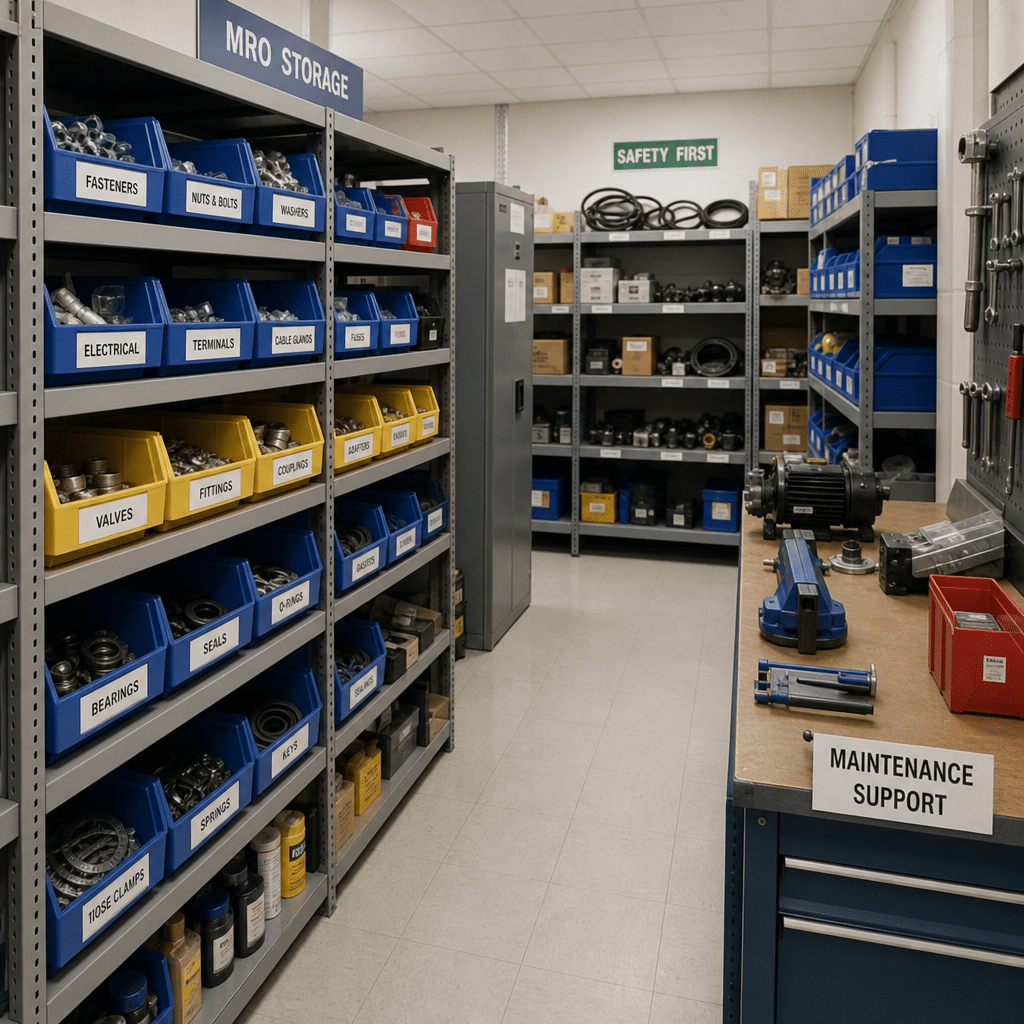
MRO materials often include spare parts, tools, safety supplies, lubricants, fasteners, consumables, and other items that support operations rather than becoming part of the finished product. Because these items are spread across maintenance shops, storerooms, vehicles, production areas, and emergency reserves, they are easy to overlook. The result is often duplicate purchasing, obsolete stock, rushed orders, and downtime caused by missing parts.
A good optimization program makes these decisions visible. It answers basic but important questions: What do we have? Where is it? How often do we use it? Which items are critical? Which suppliers perform reliably? From there, teams can build a repeatable system instead of relying on memory, workarounds, or emergency buying.
The business impact of better MRO management
MRO inventory may look small compared with direct materials, but poor control can affect production, maintenance labor, safety, and cash flow. A missing replacement part can delay a repair, extend equipment downtime, and force teams into expensive expedited purchasing. On the other hand, too much stock ties up budget, takes up space, and increases the chance that materials become damaged, outdated, or forgotten.
Better mro management helps companies move from reactive purchasing to planned support. Maintenance teams gain faster access to the parts they need. Procurement teams get better demand signals and supplier data. Finance teams see less hidden spending and fewer surprise purchases. Operations teams benefit from a more stable maintenance environment.
The goal is not to make inventory as low as possible. The goal is to make it appropriate. A low-value item that is used daily may deserve stable stock. A costly part used once every several years may require a different sourcing strategy. A critical component with a long lead time may need a safety stock policy even if usage is rare. MRO optimization gives teams a method for making those tradeoffs.
Practical MRO cost reduction strategies
MRO cost reduction should focus on total cost, not just purchase price. A cheaper part that fails early, causes rework, or delays repairs may cost more overall. Likewise, reducing inventory without considering lead time and criticality can increase downtime risk.
A balanced cost reduction plan may include:
- Reduce duplicate inventory: Standardize item records and consolidate equivalent parts where approved.
- Review slow-moving stock: Identify items with little or no movement and decide whether to keep, redeploy, reduce, or remove them.
- Improve supplier agreements: Consolidate spend where it makes sense, negotiate service expectations, and clarify lead times.
- Connect inventory to preventive maintenance: Use maintenance schedules to forecast upcoming parts demand.
- Control emergency orders: Track rush purchases and investigate the root causes behind them.
- Use kitting for planned work: Pre-stage parts for scheduled jobs so technicians spend less time searching.
- Measure stockouts and overstock together: Avoid solving one problem by creating the other.
These actions help reduce waste without weakening operational readiness. The best savings are often found in process improvements: fewer urgent buys, fewer duplicate items, less searching, and better use of existing stock.
A step-by-step approach to MRO optimization
Successful mro optimization is easier when it is treated as a structured program rather than a one-time cleanup. The work can begin with a focused area, such as one storeroom, one production line, or one category of critical spares, then expand as standards mature.
Step 1: Assess current inventory and processes
Start by documenting what is currently stocked, where it is stored, how it is requested, and how it is replenished. Compare system balances with physical counts to understand data accuracy. Interview the people who use the process daily because they often know where delays and workarounds occur.
Step 2: Segment inventory
Group items by criticality, movement, cost, and lead time. This step prevents broad rules from being applied to very different materials. For example, a low-cost daily consumable may need automatic replenishment, while an expensive critical spare may need executive visibility and a clear retention policy.
Step 3: Define standards and ownership
Assign responsibility for item setup, reorder settings, cycle counting, supplier information, and obsolete inventory review. Create standards for naming, units of measure, storage locations, and transaction procedures. Clear ownership prevents the system from drifting back into disorder.
Step 4: Improve replenishment logic
Update reorder points, min-max levels, and safety stock based on usage, lead time, and risk. Avoid setting levels once and forgetting them. A review cadence keeps policies aligned with equipment changes, maintenance plans, and supplier performance.
Step 5: Monitor, adjust, and scale
Track results and refine the process before expanding. Early wins can build confidence, but long-term improvement depends on regular reviews and consistent behavior. As the program scales, use lessons from the pilot area to improve training, reporting, and software configuration.
Best-practice checklist for sustainable results
MRO inventory management improves when daily habits support the larger strategy. Use this checklist to evaluate whether the program is built for long-term control:
- Item descriptions follow a standard format.
- Critical spares are identified and reviewed separately.
- Inventory balances are updated when parts are received, issued, returned, or adjusted.
- Reorder points reflect current demand, lead time, and operational risk.
- Storeroom locations are labeled and easy to navigate.
- Cycle counts are performed on a defined schedule.
- Obsolete and slow-moving stock is reviewed, not ignored.
- Emergency purchases are tracked by reason.
- Suppliers are evaluated on reliability as well as price.
- Maintenance, procurement, operations, and finance share the same basic inventory goals.
This checklist turns mro best practices into observable behaviors. If a team cannot see whether a practice is happening, it is difficult to manage or improve.
Metrics that show whether the strategy is working
Measurement keeps optimization practical. Instead of relying on opinions, teams can track indicators that show whether inventory is supporting maintenance effectively. The right metrics depend on the organization, but they should cover availability, cost, accuracy, and process health.
Helpful measures include inventory accuracy, stockout frequency, emergency purchase rate, slow-moving inventory value, obsolete inventory value, inventory turns, supplier lead time performance, and work orders delayed by missing parts. These metrics should be reviewed together. High inventory turns may look positive, but not if stockouts are increasing. Low emergency purchasing may look good, but not if teams are hoarding parts outside the system.
Reporting should lead to action. When a metric changes, ask what caused it and what decision should follow. MRO optimization becomes valuable when measurement changes behavior.
Turning MRO optimization into everyday practice
MRO inventory optimization works best when it becomes part of normal operations, not a special project that fades after the storeroom is cleaned. The foundation is accurate data, clear ownership, thoughtful classification, practical stocking policies, and regular review. Technology can strengthen the process, but people still need to trust the system and use it consistently.
For organizations trying to improve uptime while controlling cost, MRO offers a meaningful opportunity. Start with visibility, focus on the highest-risk and highest-waste areas, and build habits that make good decisions repeatable. Over time, disciplined mro inventory management can reduce avoidable spending, improve maintenance readiness, and give teams greater confidence that the parts they need will be there when work begins.